
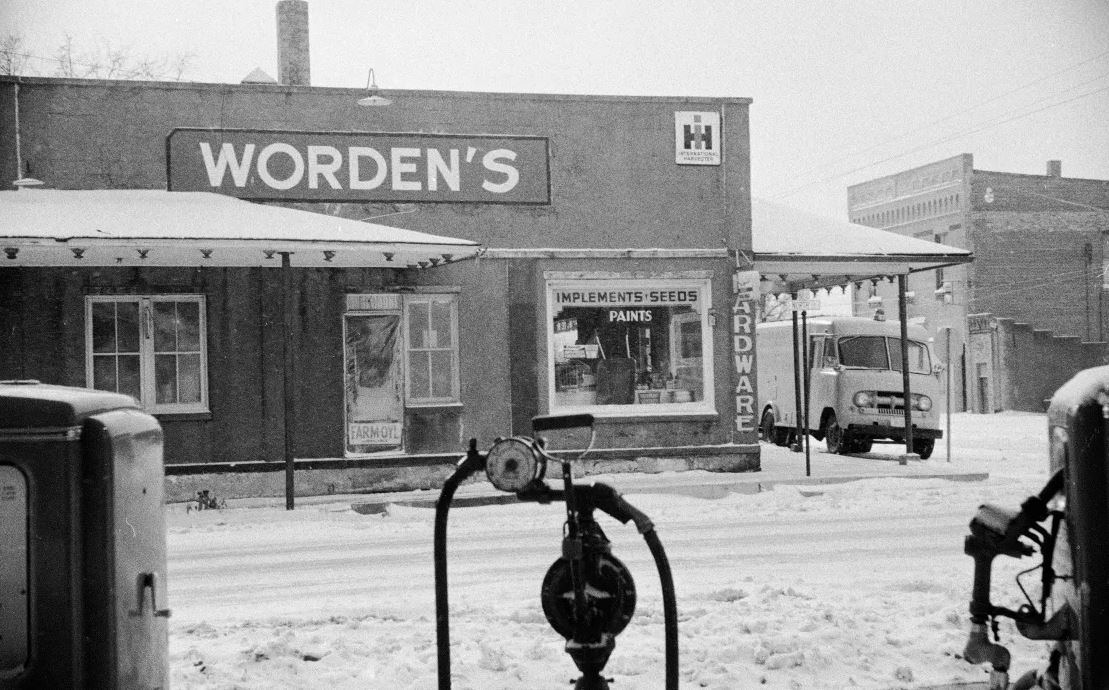
Section E: Frank Worden’s Testimony Arrangement
SUTTON: My first witness this morning is Mr. Frank Worden. He has testified both on this occasion and in two other matters. In the past when I have been present there appeared to be loud, tremendous hostility toward the defendant and has advised both myself and the sheriff that he feels there is a possibility in these the defendant he will be unable to control himself. I realize this is very unusual, but I ask the deference of the court either to take the testimony of Mr. Worden in here and have the defendant stay out in the courtroom, or alternatively, take the testimony of Mr. Worden in the courtroom and have the defendant remain in here.
THE COURT: Well, Mr. Frinzi?
FRINZI: Well, this is unusual, Your Honor.
THE COURT: Yes, it is.
FRINZI: Mr. Sutton knows what the law is. I’m not going to try his lawsuit.
SUTTON: What does that mean?
FRINZI: The law requires the defendant to be present in all stages of the procedure.
SUTTON: A right which he can waive.
FRINZI: Let me confer with Mr. Belter. Your Honor, the law requires that the defendant be present at all stages of a proceeding, and that he confront anyone that testifies against him. Unless Mr. Sutton can tell us some arrangement that Mr. Gein is present to hear and see that witness, whether we are down in here and Mr. Gein is out in the courtroom there, or Mr. Gein at that door and the witness is out there, that’s one thing, but I can’t in conscience think that any of Mr. Gein’s best interest at the time that his testimony is offered. He’s got a right to face the man giving the true testimony against him.
THE COURT: I don’t think that there is any question that that is the law.
SUTTON: I don’t think there is any question about that either. I just felt I had to call this to the attention of the court.
THE COURT: Well, would it suit your problem, Mr. Sutton, if Mr. Gein sat here in the doorway and had the door open? This is unique, but would that… assist your problem? I don’t know this man, and my own feeling —
SUTTON: I don’t know him, and I’m not a psychiatrist, but the depth of his feeling is itself obvious to me, that he is not making it up the way he feels about Mr. Gein, and, frankly, this is one of the conditions upon which he has requested me to make in order to testify. I told him in all probability I didn’t think it would be granted.
THE COURT: He can’t make conditions about how to testify, and if he doesn’t testify, I shall find him in contempt and treat him accordingly.
SUTTON: I probably spoke too strongly there. He never directly indicated that he’s not going to get on the witness stand and eventually forget everything.
THE COURT: Of course that can happen too. That’s maybe your problem. I’m willing to do this. If Mr. Frinzi consents, we can move Mr. Gein sat in this door, but I think he has to sit in such a place where he can see the witness and what he says.
SUTTON: That’s perfectly agreeable.
THE COURT: All right. Sheriff, you either sit with Mr. Gein… move his chair around so he’s sitting here and in the doorway.
FRINZI: If this is the case, for the protection of the defendant and everyone else in the courtroom, I ask you do—for security reasons—check this guy out—make a search of him so that he doesn’t come in with a darned—I mean what the heck. You called this to the court’s attention.
SUTTON: Don’t be prosecuting me.
FRINZI: I’m not, but Mr. Belter feels there’s hard feelings between Mr. Gein and Mr. Worden.
THE COURT: I feel very strongly that I would resent the idea of an unsearched individual such as this man, short, fat and should be asked if he is armed, not is not armed. I don’t know what the depth of his feelings are, and I wouldn’t care to be his kind of psychiatrist, but I want to be assured that he is not armed, and I want to be sure that he does not injure the defendant. That’s not his job. He cannot take justice into his own hands—he or anybody else. Okay. You’re a big man. You can handle it, I’m sure.
Leave a Reply